Where soul and steel converge
This is the timeless dialogue between
one man and one motorcycle
T.E. Lawrence and the
Brough Superior
S.S.100
── A bond that stirs the soul
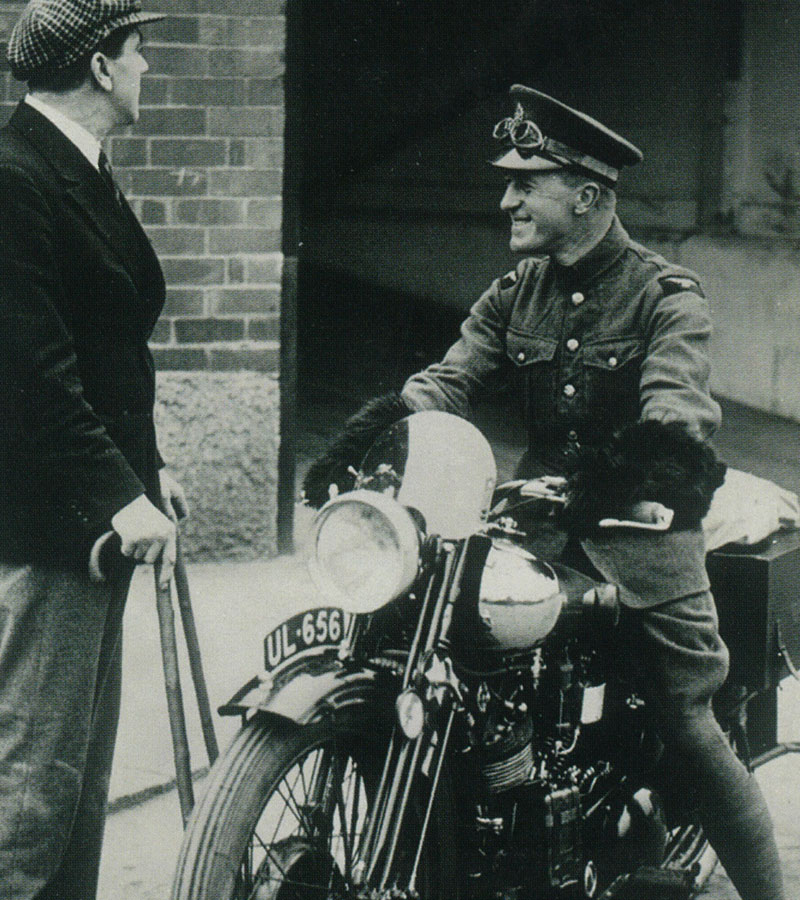
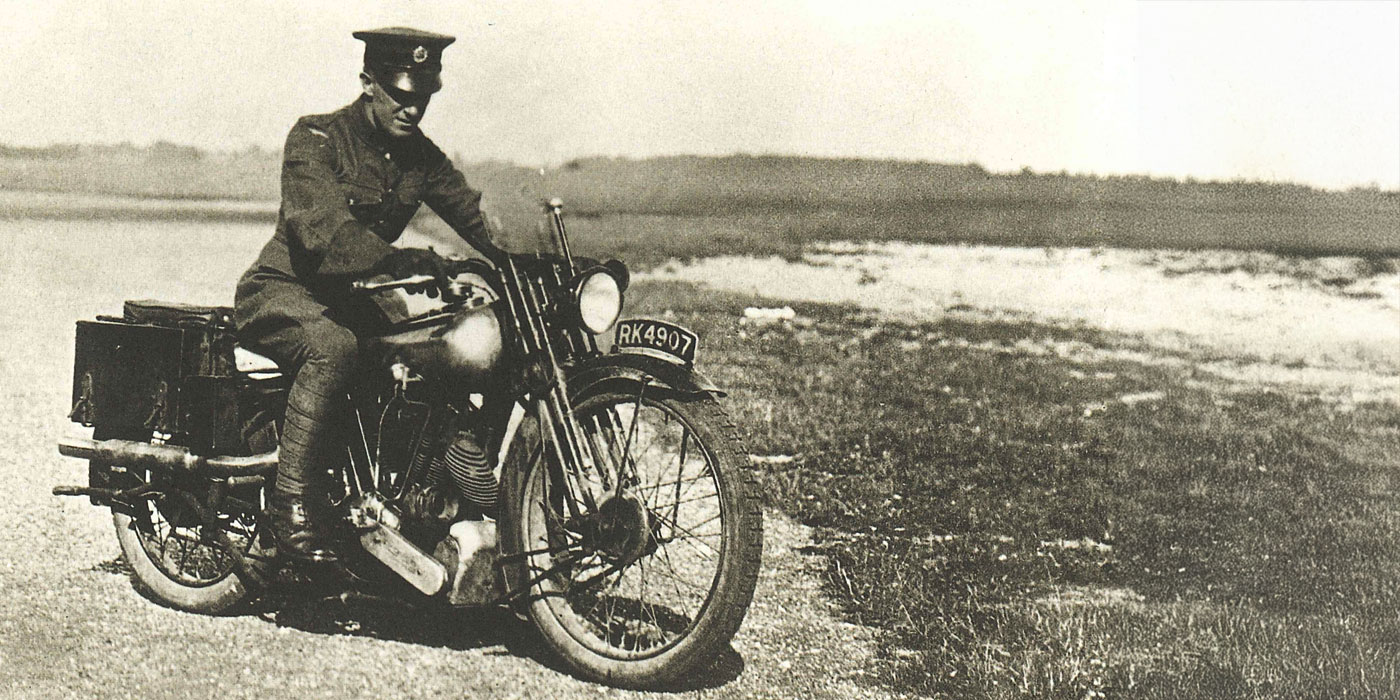
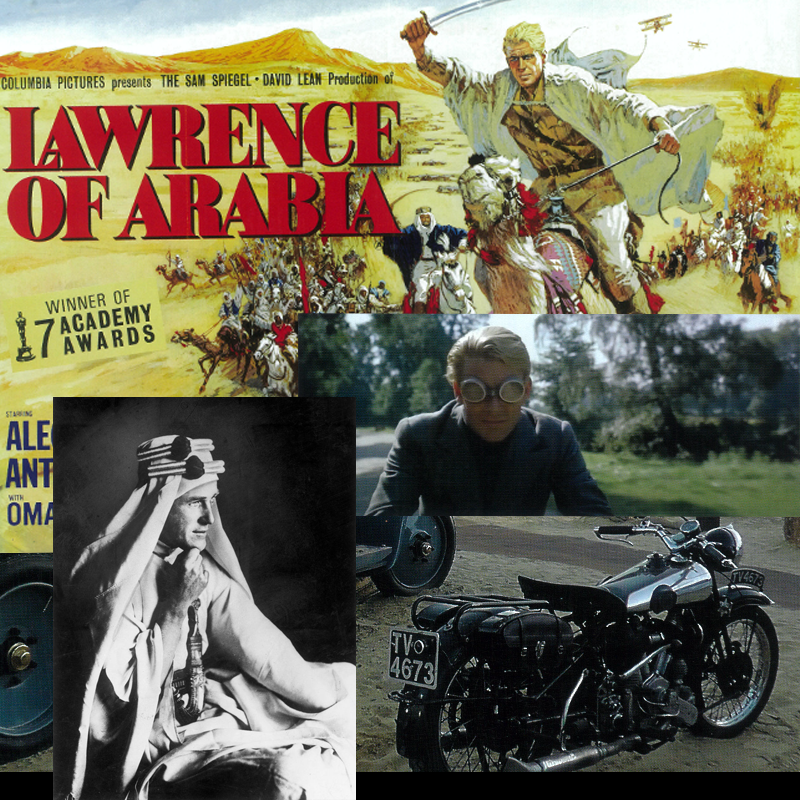
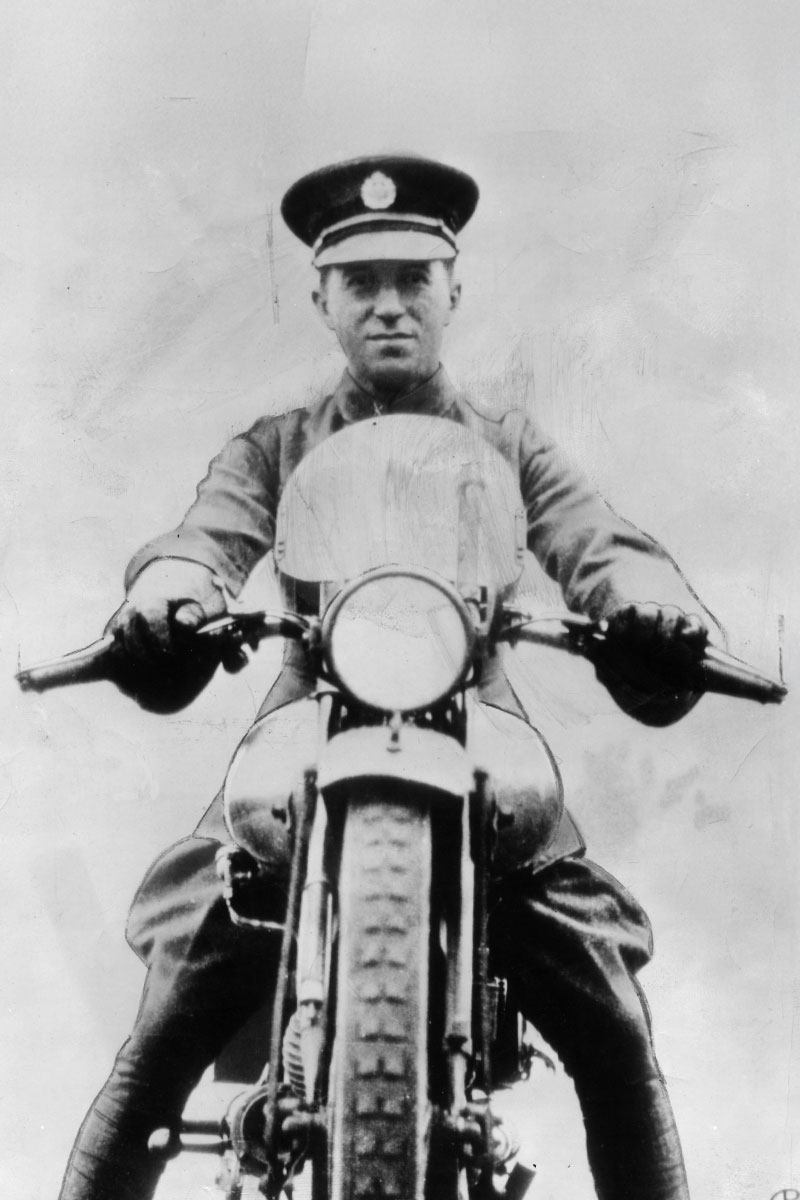
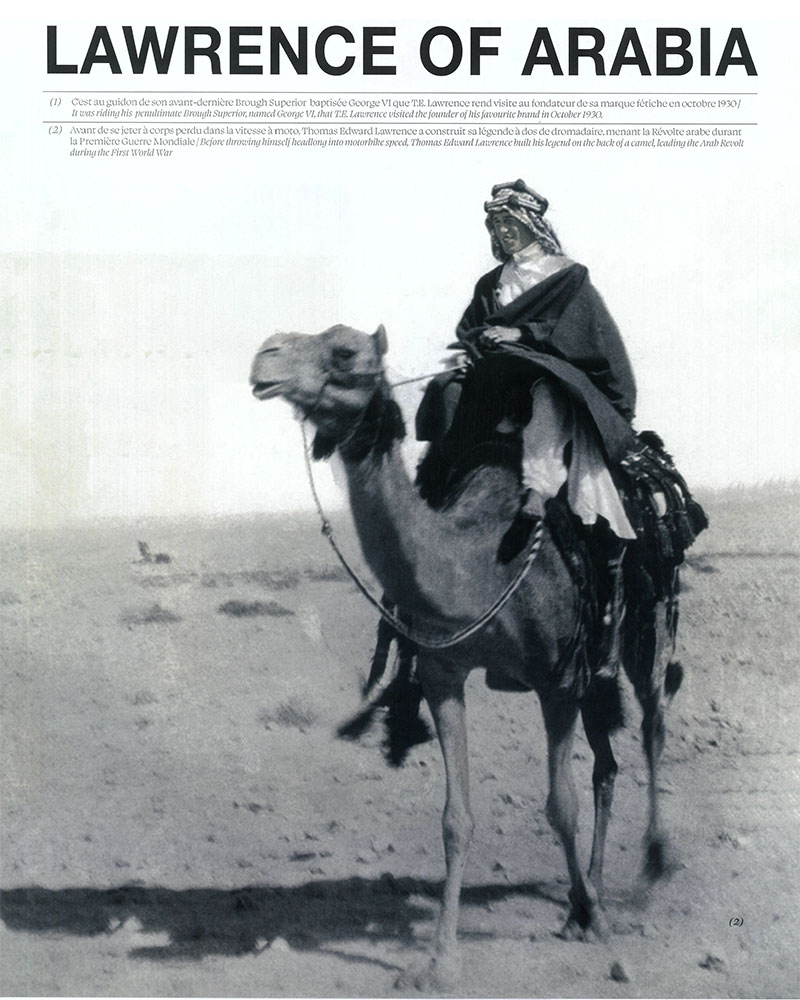
In the early twentieth century, Thomas Edward Lawrence — known as a British officer, writer, and thinker — stood out not only through his heroic exploits as “Lawrence of Arabia”, but also as a singular motorcycle enthusiast. For him, the Brough Superior was far more than a means of transport; it was a spiritual companion where beauty, speed, and philosophy converged. Sweeping through the countryside like the wind, he tasted moments in which machine and body became one. Those rides may well have eased both his inner solitude and his fierce passions. His fervour is recorded in his book “The Mint”, which reveals how deeply the experience of riding a motorcycle spoke to his inner life. The 1962 film “Lawrence of Arabia” would later bring his story to audiences around the world, and it remains highly acclaimed to this day.
T.E. Lawrence and the Brough Superior S.S.100
── A dialogue across time between one man and one motorcycle, a rare relationship in which one soul answered another.
A Profound Bond with
George Brough
── Two gentlemen united by shared ideals
The relationship between Lawrence and George Brough transcended that of a mere customer and manufacturer, resting instead upon deep trust and mutual respect. Lawrence commissioned custom-specified Brough Superior motorcycles tailored to his own preferences, and he often expressed his gratitude for their performance and design in personal letters. On September 27, 1926, Lawrence wrote to George Brough:
“Over the four years from 1922, I have ridden five Brough Superiors and covered 100,000 miles. These motorcycles have given me the greatest delight. In particular, George IV and V, which I rode in 1925 and 1926, never once failed me and possessed a speed and reliability that reminded me of an express train.”
T.E. Lawrence
This letter alone reveals the depth of Lawrence’s affection and trust for the Brough Superior. He admired not only their performance, but also their beauty and craftsmanship. Lawrence affectionately named his motorcycles “George I” through “George VII”, a gesture that reflected his respect for their creator and his profound attachment to the machines themselves. His seventh Brough Superior, after his death, was personally kept by George Brough as a tribute to his close friend. Their extraordinary connection speaks to Lawrence’s unwavering appreciation of the motorcycle and his faith in the marque. To him, a Brough Superior was not merely a vehicle, but a companion in life — a spiritual anchor.
Why Lawrence Was
Captivated by the
Brough Superior
── A resonance with speed,
beauty, and a solitary philosophy
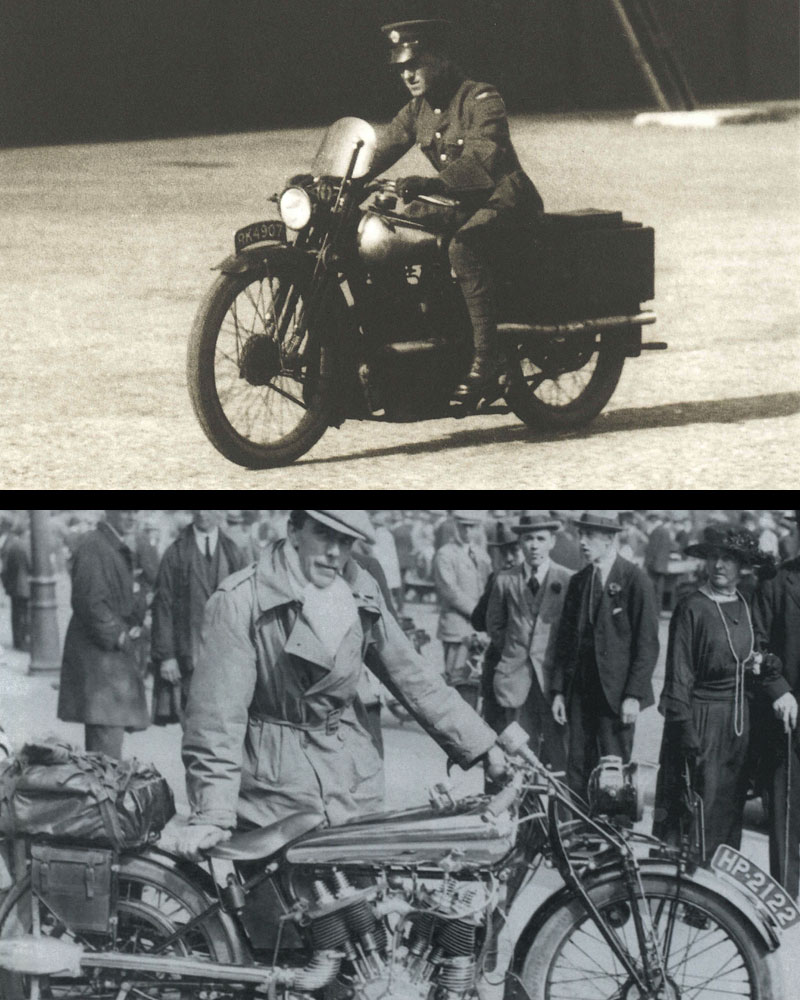
The reason Lawrence was so deeply drawn to the Brough Superior S.S.100 goes far beyond mechanical performance or aesthetic appeal. At its core was a profound spiritual affinity — a reflection of his very way of life. Even in its time, the Brough Superior stood far above convention. Hand-built in Nottingham by George Brough, each motorcycle was crafted as “the best that money could buy.” Its price of around £200 — equivalent to a rural house at the time — made ownership extraordinary. The fact that Lawrence possessed eight of them was entirely incongruent with his social class or income as a civil servant. Yet to him, the machine was never a symbol of wealth. It was a vessel through which he sought speed, freedom, and a meditative stillness found only in the quiet intensity of riding. Its performance stirred his adventurous spirit, its beauty appealed to his refined eye, and its craftsmanship embodied an ideal he revered. Remarkably, it was the only non-Rolls-Royce product the Rolls-Royce company ever permitted to use its name in advertising — an indication of how perfectly it embodied the very definition of quality.
Lawrence famously named each of his Brough Superiors “George I” through “George VIII.” His first, acquired in 1922, bore the affectionate name “Boanerges,” a term meaning “sons of thunder” in Aramaic, reflecting both his reverence and his affection for the machine. Through his motorcycles, Lawrence found escape, liberation, and a rare sense of inner clarity. Warrior, poet, philosopher — he was all of these, and to him the Brough Superior was not merely a vehicle. It was a companion for contemplation, a steed upon which he could leave the clamor of the world behind and confront his inner landscape. Like a single flash of lightning across a silent wilderness, it was the perfect form of journey, freeing the deepest corners of his heart.
Lawrence’s Brough Superior motorcycles
- 1922: His first Brough Superior, named “Boanerges”
- 1923: “George I”
- 1924: “George II”
- 1925: “George III”
- 1926: “George IV”
- 1927: “George V”
- 1929: “George VI”
- 1932: “George VII”
— The motorcycle Lawrence was riding at the time of his fatal accident. - 1935: “George VIII”
— Ordered but never delivered after his death.
Speed Told
in Poetic Form
── From the Work “The Mint”
Lawrence expressed the unity he felt with his motorcycle — and the rapture of speed — through profoundly poetic language. In his work The Mint, he wrote passages such as the following:
“Beyond the bend lay the straightest, fastest road in England. I had the honour of letting myself be carried along it. The exhaust note unwound behind me like a long cord until speed snapped it, leaving only the wind beating against my head with a cry.”
He also described the feeling of unity between rider and machine:
“A motorcycle with a little blood in it, capricious — the finest of all earthly vehicles. For it extends our bodily powers with perfect rationality, and yet seduces us constantly toward excess with its honey-smooth, tireless pace. My Boanerges loves me; thus it will go five miles faster for me than for any other rider.”
And he captured the essence of the riding experience in lines like this:
“The wind took my head from my shoulders and sealed my ears in silence. Soundlessly we sped between fields shaved by the sun, as if circling through the air.”
These passages reveal how intensely Lawrence perceived the union of man and machine. To him, the motorcycle was not transportation. It was liberation — a medium for self-expression, a passageway to the extraordinary within the ordinary.
The Motorcycle Accident
and Its Lasting Impact
── A Silent Death That Lit a Light for Future Generations
On a quiet English country road, a lone rider cuts through the wind on his motorcycle. The air strikes his face, the exhaust note dissolves behind him, and soon even that sound is swallowed by the cry of the wind. The world falls into silence. Suddenly — a group of boys on bicycles ahead. He swerves, loses balance, and falls. His goggles fly off, drifting through the air before catching on a branch, swaying softly. This is the opening scene of the film “Lawrence of Arabia.”
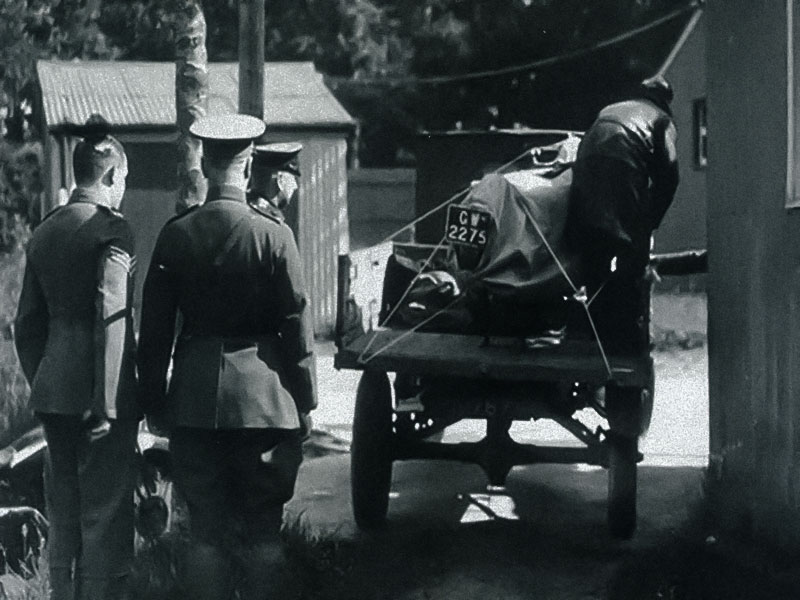
On May 13, 1935, Lawrence was riding his beloved Brough Superior S.S.100 near Clouds Hill in Dorset, England, when he swerved to avoid two boys on bicycles. He was thrown from the motorcycle and, without a helmet, suffered severe head injuries. Six days later, on May 19, he passed away quietly at the age of 46.
This tragedy would become a turning point not only for Britain but for the history of global traffic safety. Hugh Cairns, the young neurosurgeon who treated Lawrence, refused to let the death be in vain. He began research into motorcycle-related head trauma, and during World War II, in 1941, published findings showing a clear correlation between helmet use and reduced mortality among military dispatch riders. The British Army soon made helmet use mandatory for all riders. This movement later reached the civilian sphere, leading to the legal requirement for motorcycle helmets in the UK in 1973.
Lawrence’s death became a warning that continues to resonate: the importance of protective equipment in saving lives.
Thomas Edward
Lawrence
── And still, he never stopped riding.
Lawrence was a soldier, a writer, a poet, a traveler — and above all, a spirit endlessly seeking freedom. His love for the Brough Superior was not simply because it was fast, beautiful, or powerful. To him, it was a pair of wings that severed the constraints of daily life and carried him into the quiet, solitary realm of his inner world. He rode through open landscapes, conversed with the wind, and let the rhythm of the engine merge with the beat of his own heart. In every moment, he was alive — more intensely, more sincerely than most could ever imagine.
The final act of his life — swerving to protect two boys on bicycles — was not an accident of fate, but a reflection of his nature. It was the culmination of a life defined by conviction, empathy, and courage. The hero whose name is carved into history continues to speak to us even now, not as a distant legend, but as a quiet question whispered across time.