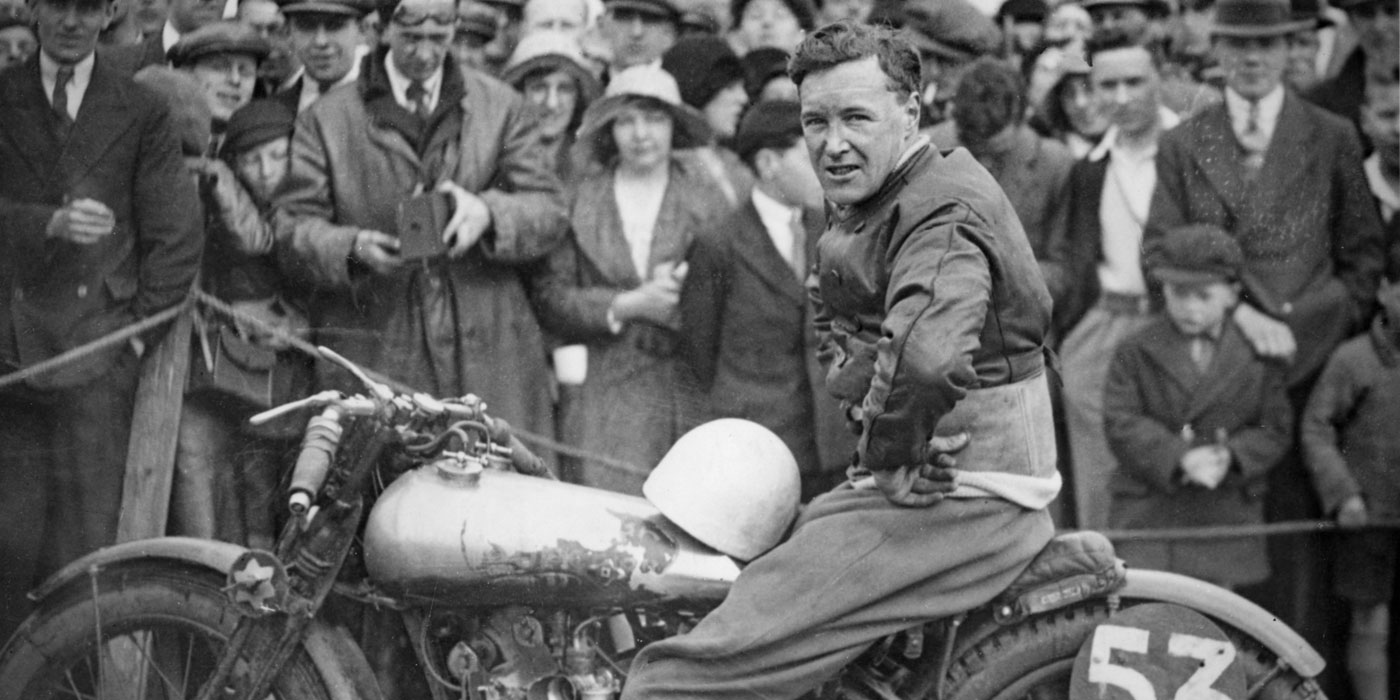

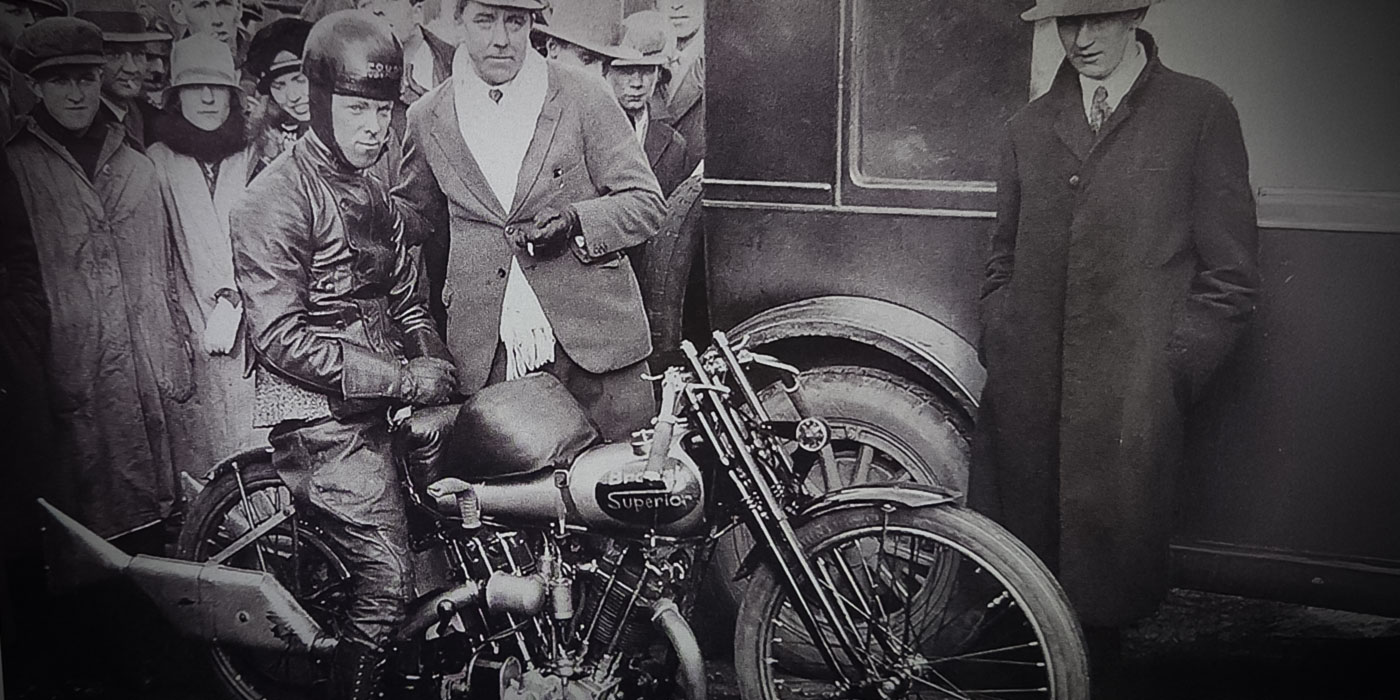
Herbert "Bert" le Vack (born 1888) was one of the most prominent motorcycle racers of the 1920s, and a master tuner known as the “Wizard of Brooklands.” Before the First World War, he gained experience at Daimler and the Hendee Manufacturing Company (Indian Motorcycles), later serving as a racing engineer at JAP (J.A. Prestwich) after the war. Around 1923, George Brough recognized his exceptional skill and invited him to join Brough Superior for their world speed record attempts. From that point forward, le Vack served as both rider and developer, becoming a driving force behind the brand’s growing prestige.
In 1924, riding Brough Superior’s latest model, the S.S.100, le Vack attempted the motorcycle world land-speed record at Arpajon, France (later on a straight road near Montlhéry). He achieved an astonishing average speed of 119.05 mph (approx. 191.5 km/h), breaking the absolute motorcycle speed record of the time. This sensational feat was celebrated as the moment the “100-mph barrier” was shattered. In that same year alone, le Vack set a total of nine world speed records. Later in 1929, riding an improved Brough Superior machine, he pushed the record to 126.75 mph (207.33 km/h), reclaiming the title of world’s fastest. These achievements firmly established the S.S.100 as the fastest motorcycle of its era.
As an engineer, le Vack also made significant contributions to the development of Brough Superior’s engines. At JAP, he worked alongside Val Page and others to develop a large-displacement V-twin engine (approx. 1000 cc), which became the heart of the S.S.100 and other Brough Superior machines. The 996 cc JAP OHV engine used for the 1924 record run was specially tuned by le Vack, earning the nickname “Yank-Buster” for its ability to outperform American machines such as Indian and Harley-Davidson. He also experimented with custom fuel mixtures, extracting maximum performance from the engines. His engines powered not only Brough Superior, but also Zenith, New Imperial, HRD and many others, making him one of the most sought-after tuners of the time. It is also said that the engines of the S.S.100 owned by T.E. Lawrence (Lawrence of Arabia) may have been adjusted directly by le Vack himself.
As a racer, le Vack left numerous legends across various competitions. In the 1914 Isle of Man TT (Lightweight class), he famously pushed his motorcycle to the finish after it stopped near the end, securing a determined second place. At Brooklands, he displayed extraordinary high-speed skill, becoming the first rider in circuit history to record a lap over 100 mph in 1922, earning a coveted Brooklands Gold Star. He also won the only 500-mile endurance race ever held at Brooklands, and astonishingly won two additional 200-mile races on the same day. For these extraordinary feats, le Vack became widely known as the “Wizard of Brooklands.”
His engines powered victories across Europe, and he served as a mentor to younger riders and engineers, leaving a profound impact on the motorcycle world. In 1931, he tragically passed away in Switzerland during testing of a Moto-SACHS sidecar machine, but his legacy continues to be honored to this day.
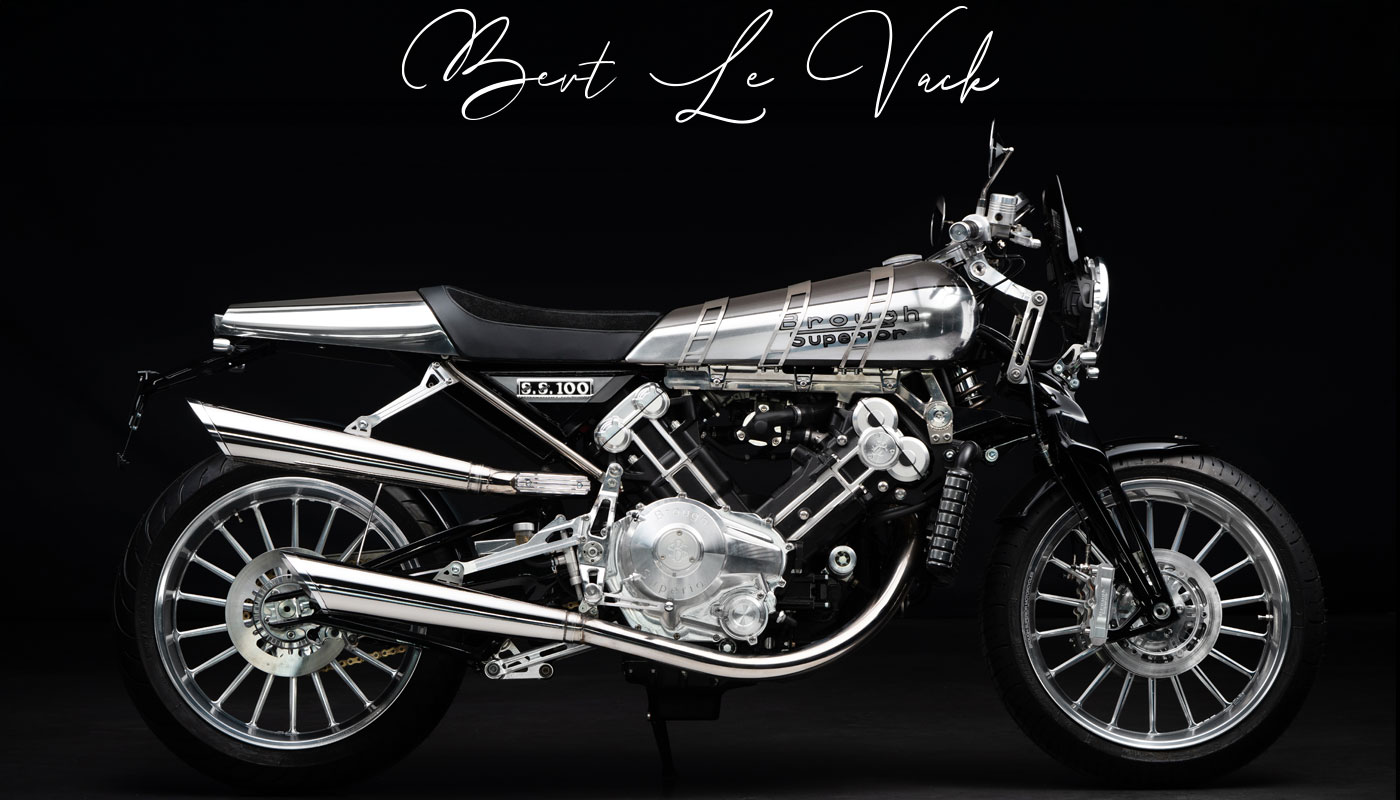
Brough Superior continues to celebrate le Vack’s achievements, acknowledging him as one of the legendary British racers who defined the golden era of the 1920s and 1930s. In 2021, the revived Brough Superior unveiled the ultra-limited “S.S.100 Bert le Vack” model dedicated to him. Only nine units were produced — one for each world speed record he set in 1924. Featuring a modern interpretation of the classic S.S.100, titanium tank straps, and exclusive grey paintwork, the machine pays homage to one of the brand’s most influential figures.
The records and passion Bert le Vack left behind have never faded. Under the leadership of Thierry Henriette, the modern Brough Superior created a special commemorative model — the S.S.100 Bert Le Vack — limited to just nine units worldwide, in profound tribute to this legendary figure. This extraordinary machine embodies the brilliance worthy of the myth, blending the memories of the 1920s with contemporary engineering. The spirit of the man who once mastered the wind now lives on, carried forward to riders of the present era.