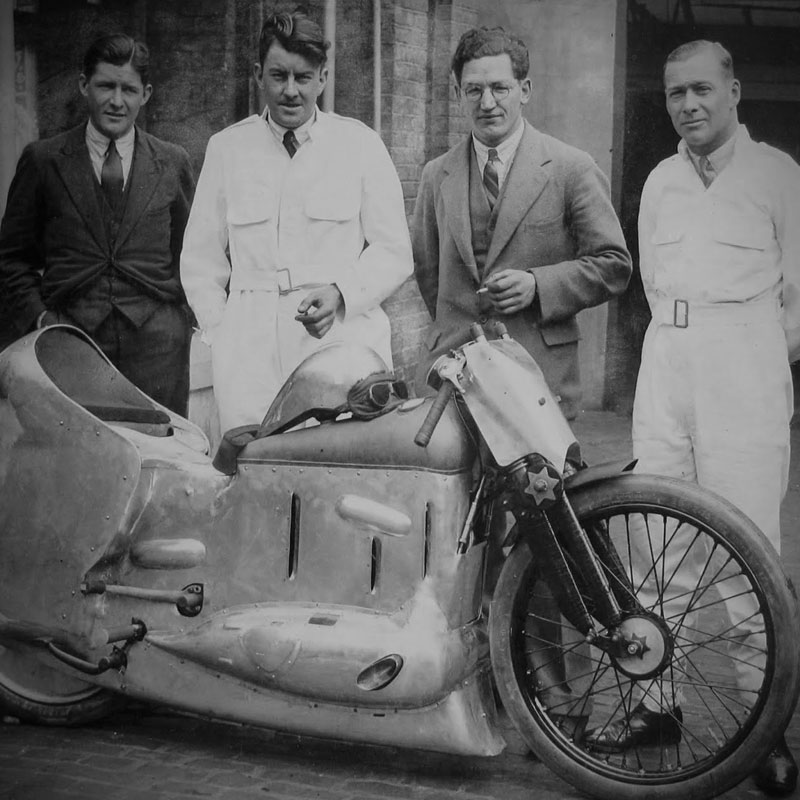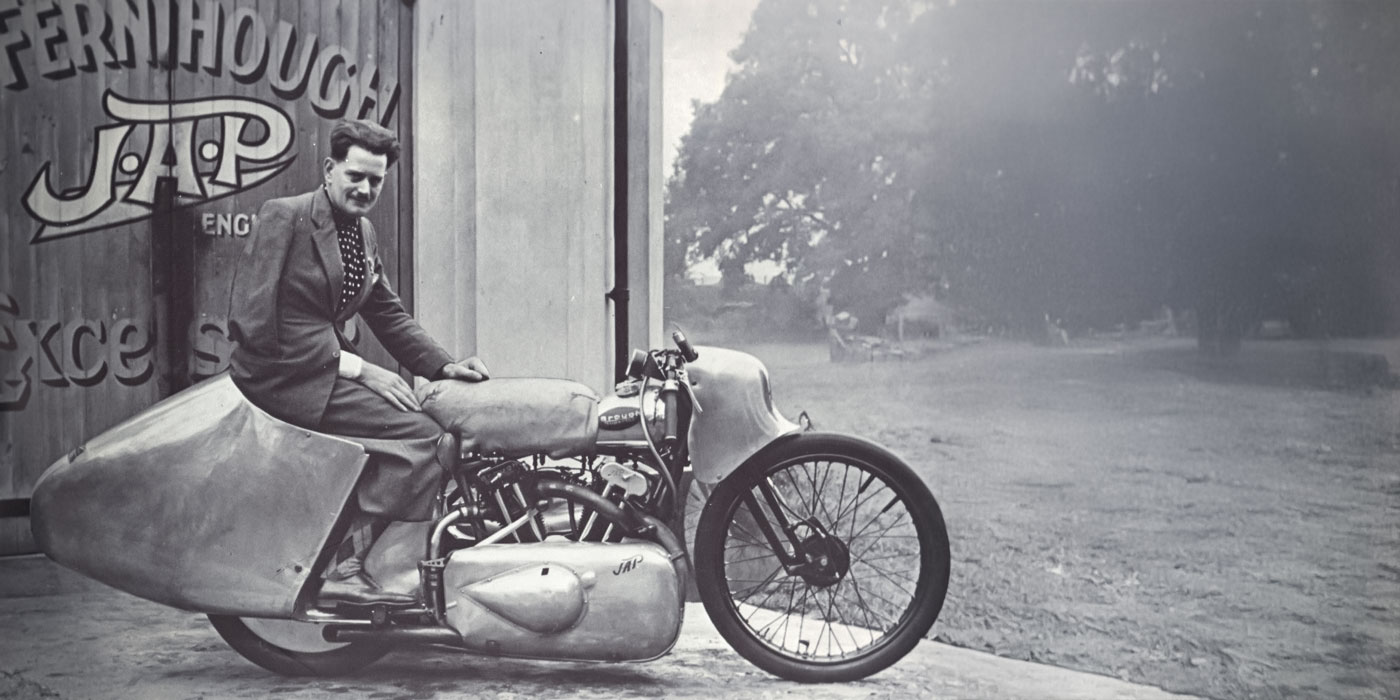

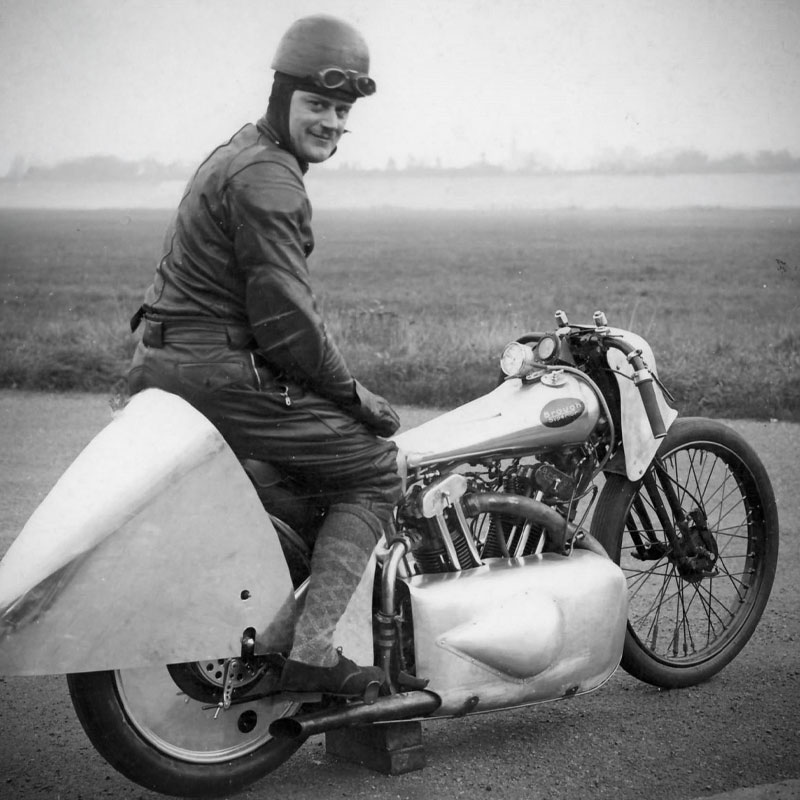
The 1930s — a turbulent era shadowed by rising global tensions. Yet beneath that unsettled sky, the human spirit still carried an unquenchable yearning for challenge. In that age, a young British rider set forth toward a dream he would stake his entire destiny upon. His name was Eric Fernihough. And within his heart burned a single, unwavering conviction — to become *the fastest man in the world*.
But the path toward glory was steep and solitary. Fernihough had little support, no generous patronage, no abundance of resources. What propelled him forward were his own hands, his skill, his resolve — and one irreplaceable companion.
That companion was Brough Superior — the “Rolls-Royce of Motorcycles,” a marvel of British craftsmanship. Hand-built with unparalleled precision and pride, it was the one machine capable of carrying Fernihough toward his impossible dream. Their relationship transcended the simple bond between rider and motorcycle. It became a profound partnership — two beating hearts aligned, pursuing a summit beyond human imagination.
A young man captivated by speed, and a machine forged to embody excellence — their story intertwines ambition and solitude, triumph and tragedy, and an enduring legacy that still shines across time. From the moment Eric Fernihough and Brough Superior crossed paths, a quiet legend began its relentless run.
Speed — for Eric Fernihough, it was never a lifeless number. It was proof of a soul unleashed, a sharpened blade with which to carve his existence into the world. With Brough Superior — his supreme and irreplaceable companion — he began his fearless ascent toward the unknown horizon of absolute speed. In 1927, on British soil, he took his first monumental step. Riding a meticulously tuned Brough Superior S.S.100, equipped with a 1000cc J.A.P. V-twin engine, Fernihough recorded an astonishing top speed of 122.38 mph (196.9 km/h) — a figure nearly unimaginable for its era. And yet, this was merely the prelude to heights still unseen.
Time moved forward to 1935 — the legendary Brooklands Circuit, an oval track carved into British motorsport history. There, Fernihough achieved another feat destined to echo through time. Controlling a supercharged Brough Superior of his own modification, he set a blistering lap record of 123.58 mph — a mark surpassed only once, by Noel Pope, before the circuit’s closure in 1939. It was a solitary monument to speed, carved in the wind.
Yet the fire of his ambition burned still brighter. In 1936, Fernihough continued his pursuit, fitting a supercharger to his Brough Superior and shattering records across Europe. In Hungary and beyond, he achieved a flying mile (two-way average) of 163.82 mph (263.64 km/h), surpassing the record once held by Germany’s Ernst Henne. Thus began a fierce duel that divided an era — a contest for the title of the fastest man on earth.
And then came April 19, 1937. Győr, Hungary — on a newly constructed straight road. With his 995cc Brough Superior, his skill, and his absolute resolve, Fernihough launched himself toward the limits of what humanity believed possible. His two-way average speed: 169.79 mph (273.25 km/h). In that instant, Eric Fernihough was officially crowned the fastest man on earth.
But he was not finished. That same day, he mounted a second machine equipped with a sidecar and charged again into the wind, recording 137.11 mph (220.66 km/h) — another world record. In doing so, he conquered both the solo and sidecar categories in a single historic sweep.
These were not mere numbers on a page. They were the symphony of a man who staked his life on speed, and a machine — Brough Superior — that answered his every demand beyond the limits of reason. Fernihough’s quest left the world not only new records, but a message across time: that those unafraid of their limits may one day transcend them.
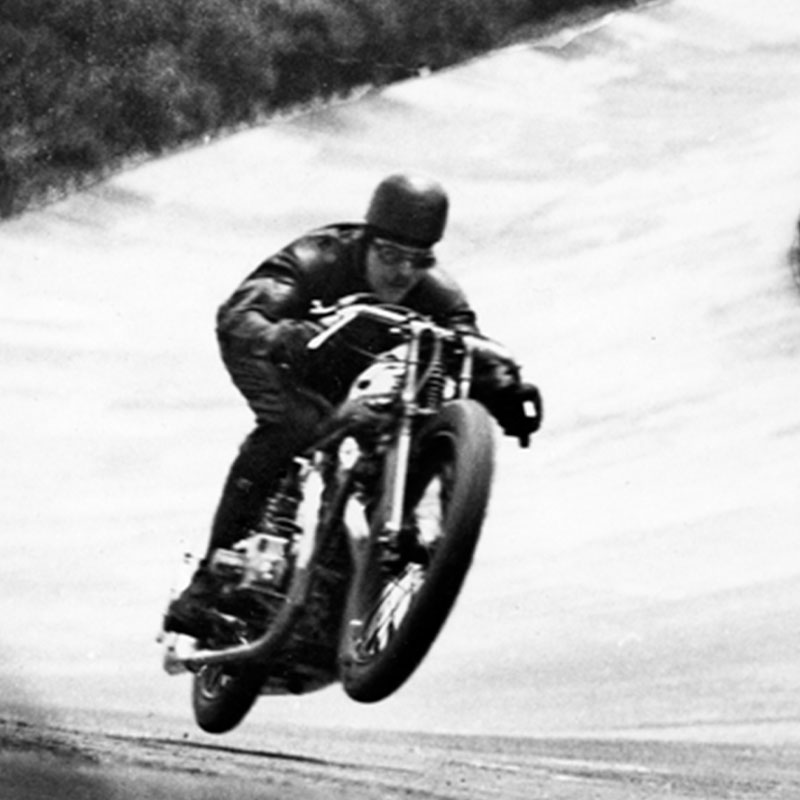
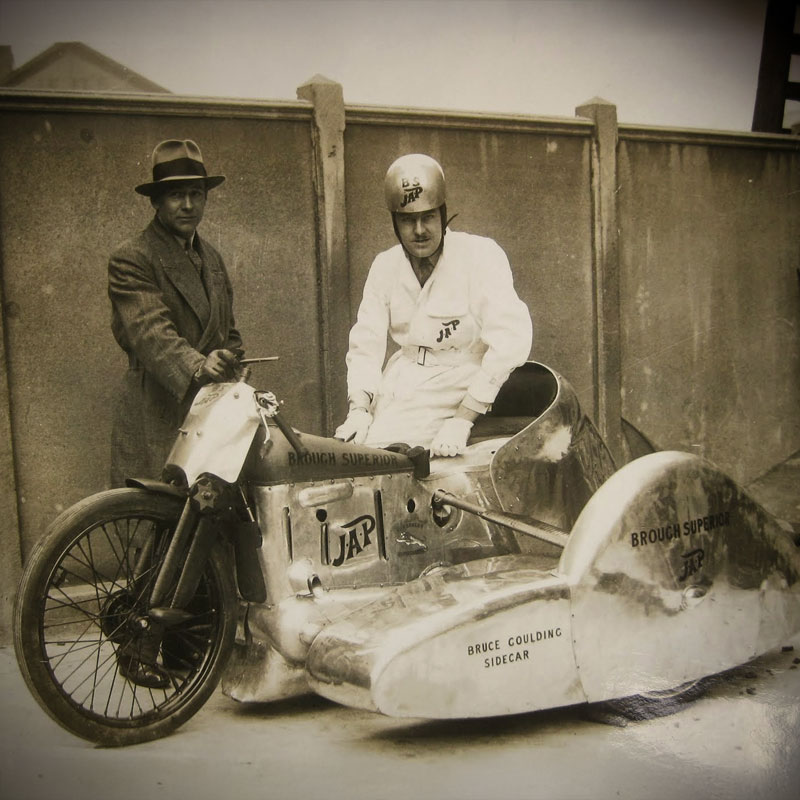
To Eric Fernihough, speed was never a mere record. It was a question posed to the world, and at the same time, an act of carving his own existence into history. He rode with unwavering intent — “to become the fastest man on earth.” This was not a dreamer’s fantasy, but a fire that burned as a living battle within him. Ambition certainly lived in his heart, yet it was not for display nor pride. Rather, it was a desperate, almost sacred desire to remain honest to the abstract ideal of speed itself.
Fernihough chose a solitary road. While riders like Germany’s Ernst Henne challenged records backed by national prestige, abundant funding, wind-tunnel testing, and cutting-edge engineering, Fernihough faced the wind with little more than his own hands, his skills, and his resolve. It was reckless in one sense — and profoundly human in another. As he pushed against his own limits, he also sought harmony with his machine, standing as craftsman, philosopher, and warrior all at once. His chosen companion, Brough Superior, was not a tool but a vessel of intent, a structure upon which he inscribed his ideas. For him, the machine was not a means but a counterpart — a partner in dialogue. Speed, for Fernihough, was the reach of the spirit beyond the body, and the pursuit of speed was not about moving fast, but asking why one must move fast at all.
With every record he achieved, he drew closer to his own philosophy — yet those records were never built from the safety of controlled certainty. Troubles, failures, accidents, breakdowns — countless obstacles stood before him. Still, with his machine at his side, he stood up each time and rode again. Ambition and conviction, technique and intuition — all were poured into each attempt as he spent his life confronting the question, “What is speed?” At the end of this journey, in 1937, on the straight road at Győr, Hungary, Fernihough recorded an average speed of 169.79 mph (273.25 km/h), etching the world’s fastest record into history. His ambition had finally been fulfilled. But perhaps the title itself meant little to him. What mattered were the steps that had led him there — the solitary preparations, the repeated repairs, the quiet battles with doubt, and the profound unity he forged with his Brough Superior. It was these elements that made his pursuit truly worthy of being called a faith.
Records and medals may fade with time. But a path carved by earnest will endures in memory. Even now, somewhere, the echo of that engine seems to rise again with the wind. Fernihough’s journey was not simply a quest for speed — it was the road on which he sought the meaning of existence itself.
The bond between Eric Fernihough and Brough Superior was never a simple relationship between rider and machine. It was a profound connection built on trust, precision, and the shared pursuit of the extreme. In the mid-1930s, Fernihough stood as a solitary challenger. Resources were scarce, supporters few, and yet the fire of his ambition never dimmed. It was at this crucial moment that George Brough, founder of Brough Superior, extended his hand — not as a businessman, but as a man moved by Fernihough’s talent and unyielding passion. George provided two S.S.100 motorcycles: one nearly new, the other assembled from spare parts. Fernihough meticulously tuned and rebuilt them, transforming each into a purpose-built machine for record attempts.
Brough Superior — the “Rolls-Royce of Motorcycles.” Choosing such a machine was not merely about seeking speed; in the realm of extreme velocity, one entrusts one’s life to engineering. Fernihough endured tire bursts, oil leaks, ignition failures — countless hazards at unimaginable speed. Yet the frame and engine of the Brough Superior never betrayed him. Amid the thunder of the engine and the violent vibration of full acceleration, he trusted the machine completely, and the machine answered with unwavering fidelity. What grew between rider and motorcycle was no longer mechanical — it was a form of shared fate, a bond that transcended the line between steel and human resolve.
His quest was also supported by extraordinary craftsmanship. While manufacturers such as BMW and Gilera relied on wind-tunnel testing and vast engineering resources, Fernihough spent winter months alone in a metal workshop, shaping streamliner bodies from aluminum by hand. He rewired magneto ignition systems, reinforced clutches and gearboxes, and refined every component through sweat, oil, and relentless effort. Brough Superior, in turn, supported him with parts supply and technical guidance. It was a challenge built not on corporate power, but on trust between individuals — a handmade pursuit of speed, born from conviction. The days Fernihough and Brough Superior spent together were not only adorned with glory, but etched with mud, labor, and unwavering pride. Their bond became legend, and even now, it endures as one of the great myths of speed.
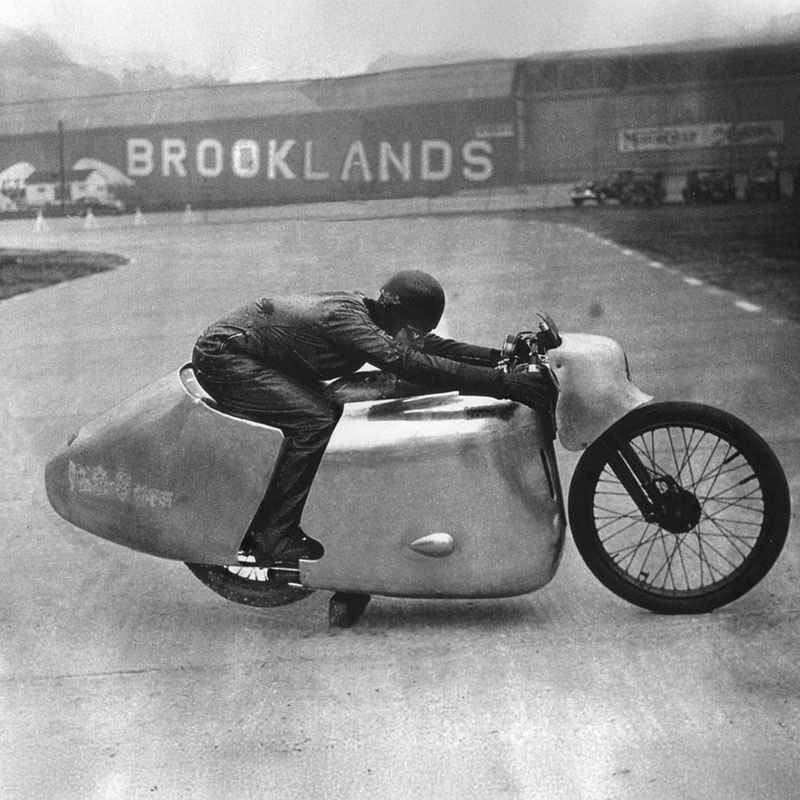
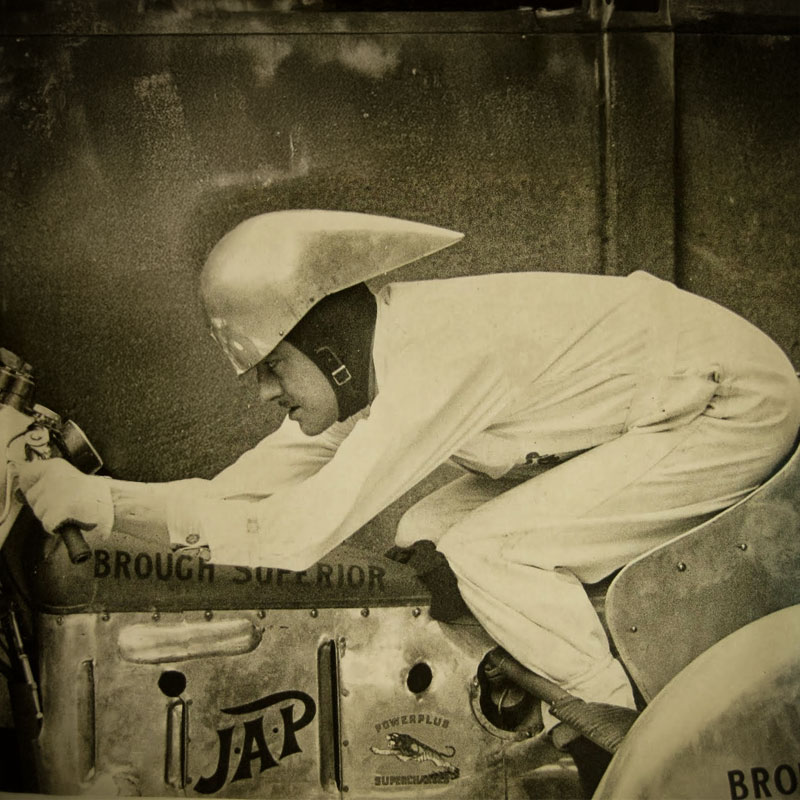
The title of “World’s Fastest” was far more than an honor. It was a battleground where nations staked their prestige, and a crucible that tested the resolve and spirit of those who dared pursue it. In the 1930s, the world was stirring once more. In Germany, Ernst Henne — backed by the Nazi regime — shattered speed records one after another with cutting-edge BMW machines and immense financial support. Meanwhile, British privateers could rely only on scarce funds and limited assistance. Eric Fernihough was among them — a lone warrior whose only weapons were his unwavering passion and his absolute trust in the Brough Superior.
In 1936, he challenged the official record attempt held on the Frankfurt–Darmstadt section of the German Autobahn. A monumental event fueled by national pride. Standing there amid the futuristic, wind-tunnel-tested BMW streamliners, Fernihough and his Brough Superior appeared almost out of place — even mocked as “medieval relics.” And trouble struck as expected: oil leaks, ignition failures, clutch burnouts. His machine barely survived the run, and the 1936 attempt ended in frustration. Yet Fernihough’s resolve did not falter. Returning to England, he stripped the machine down, rewired the magneto ignition, replaced the gearbox with a reinforced version, and began searching — driving more than 5,000 miles — for the perfect road on which to challenge the record again. He ultimately found it: a newly constructed straight road near Győr, outside Budapest. A portion of the London–Istanbul international route, flat, smooth, and perfect for a world-record attempt.
In 1937, Fernihough arrived in Győr fully prepared. His first challenge broke Henne’s speed on the outbound run, but a gearbox failure on the return prevented official recognition. Still he refused to yield. He returned to England, rebuilt the machine again, and personally drove another 1,100 miles back to Hungary. His determination had become something close to obsession. Then — April 1937. After enduring foul weather, financial strain, and countless setbacks, he seized his moment. A flawless run. The Brough Superior tore across the horizon with a thunderous roar, achieving an average speed of **169.79 mph (273.25 km/h)**. In that instant, Eric Fernihough became the fastest man on earth. His team must have stood in quiet triumph, fists clenched in hard-won victory. Yet the title would not last forever. Later in 1937, Italy’s Piero Taruffi and Ernst Henne would reclaim the record, overtaking Fernihough once again. And still he did not waver. With renewed modifications and relentless determination, he continued his pursuit — man and machine united in the quest to regain the crown of the world’s fastest.
When Eric Fernihough and Brough Superior crossed paths, two spirits intertwined — and a legend named Speed quietly began its run. In 1937, on the long straight road at Győr in Hungary, Fernihough and his Brough Superior achieved an astonishing feat: an average speed of 169.79 mph (273.25 km/h), setting a new world record. His challenge was sustained by his burning passion, the overwhelming capability of the machine beneath him, and above all, the profound trust shared between rider and motorcycle. Fernihough pushed the boundaries of human endurance with his very life; the Brough Superior answered him, its heartbeat unwavering even in the realm of the extreme. The bond they forged grew beyond the confines of mere record-setting — becoming a timeless tale of harmony between man and machine, passed down through generations.
In 1938, Fernihough set out toward yet another challenge. Fate, however, dealt a merciless blow: he lost his life during a run on a different machine, his final dream left unfinished. And still, that ending did nothing to dim the radiance of their story. Fernihough remains celebrated as “the last world speed record holder before the war,” and Brough Superior as “the machine that conquered the world’s fastest title.” Together they surged through a golden age and carved their names into eternity. To this day, Brough Superior honors him with pride — his heroic image preserved in official archives and heritage displays. The tale of a man enchanted by speed and the motorcycle that answered his call continues to echo softly through time. Eric Fernihough and Brough Superior — when these two names converged, it was more than a speed record; it was a symphony of two souls in motion. And even now — its unseen melody rides upon the wind, circling the world.