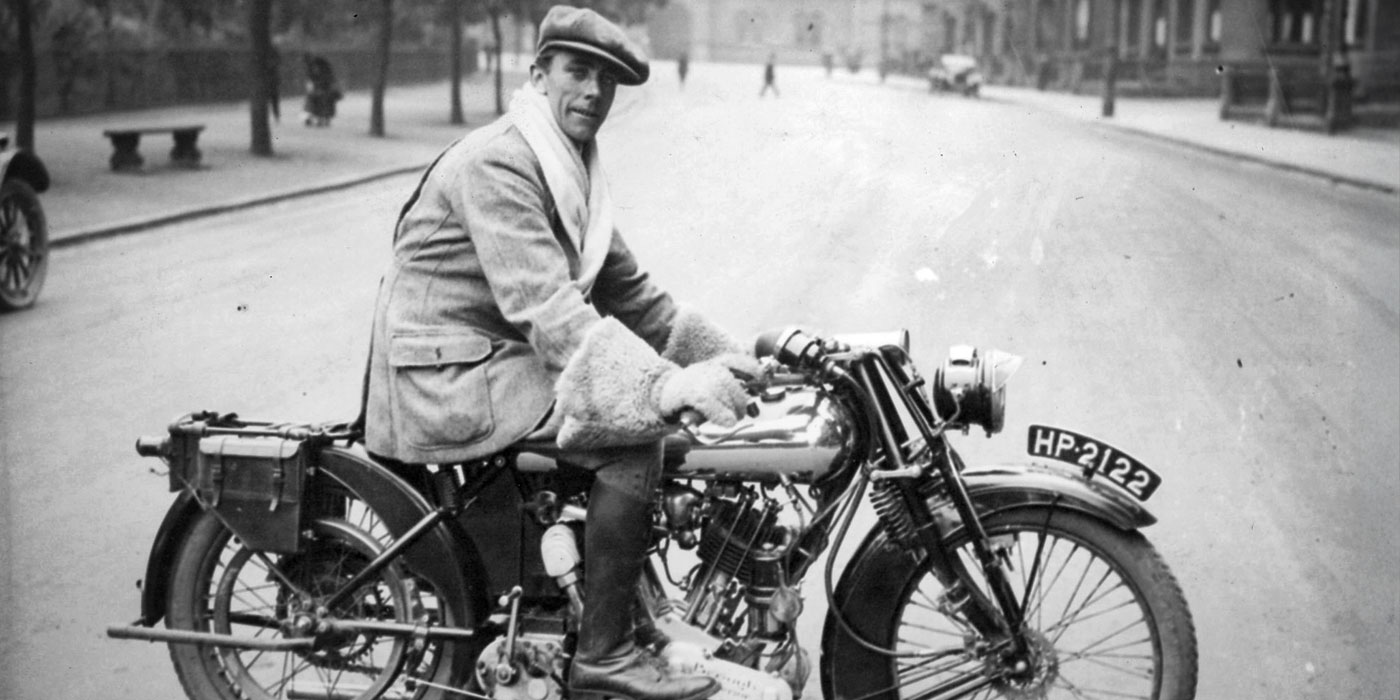

In the early twentieth century, as British industry flourished and numerous motorcycle manufacturers emerged, one name continued to shine with unmistakable distinction — George Brough. He was the creator who infused the motorcycle with the soul of a “moving work of art.” A manufacturer, a designer, and a rider himself, he built a singular brand guided by his own aesthetic sensibilities and unwavering convictions: Brough Superior. Literally meaning “the superior Brough,” the machines he crafted possessed a dignity that surpassed performance alone, captivating discerning enthusiasts around the world.
At a time when motorcycles were regarded merely as means of transport or competitive machines, George saw them as vessels of “the joy of riding” and “the pride of ownership,” a medium through which a philosophy itself could be expressed. His pursuit of speed and reliability, combined with meticulous attention to finishing, material selection, and rider feel, elevates him to the stature of an artist. Every Brough Superior carried no compromise — each machine was built as a “perfect creation,” welcomed by riders across the world as a partner that resonates with their senses.
Here, we cast light upon the life and ideals of George Brough — the “origin of spirit” behind these legendary motorcycles. What he crafted was far more than technology or design; it redefined the very meaning of what a motorcycle could be. The enduring reverence for the name Brough Superior today is proof that the philosophy he instilled still lives on, undimmed by time.
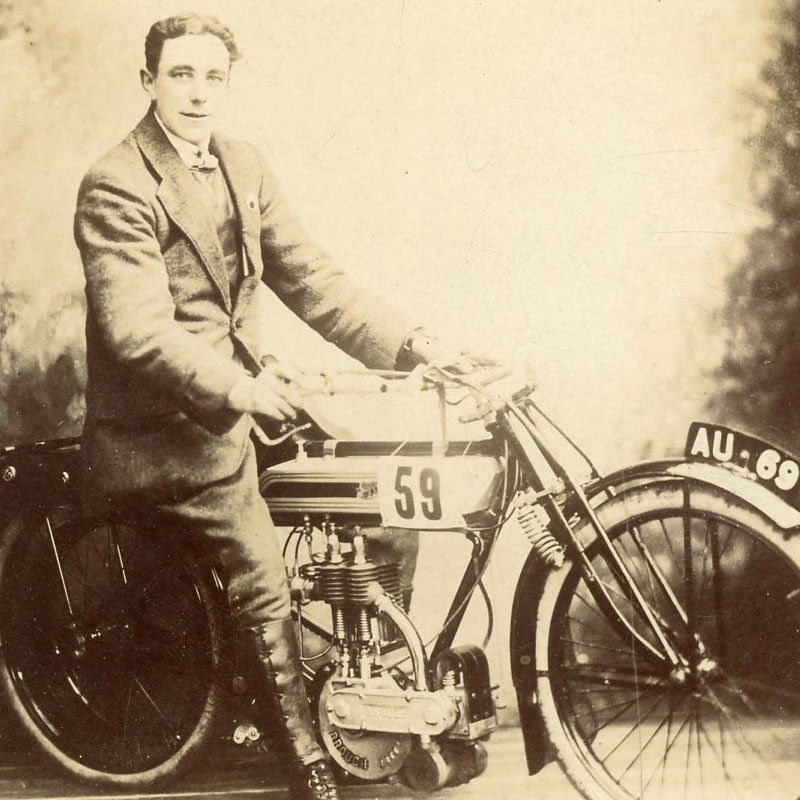
George Brough was born on April 21, 1890, in Nottingham, England, as the second son of William E. Brough, who operated a motorcycle manufacturing business. William, an engineer ahead of his time, had already founded his own factory, **Brough Motors**, in the 1890s, producing and selling motorcycles independently. In an era when the age of steam locomotives and bicycles was giving way to the rise of internal-combustion engines in Britain, the Brough family’s factory became a notable presence in the local community, earning deep trust from its customers.
Young George grew up wandering daily through this factory, naturally taking tools in hand while surrounded by the scent of oil. To him, motorcycles were symbols of **imagination and creation**. As he assisted with maintenance work, he absorbed the principles of mechanics with his body, and this intuitive understanding eventually evolved into design sensibilities and riding skill.
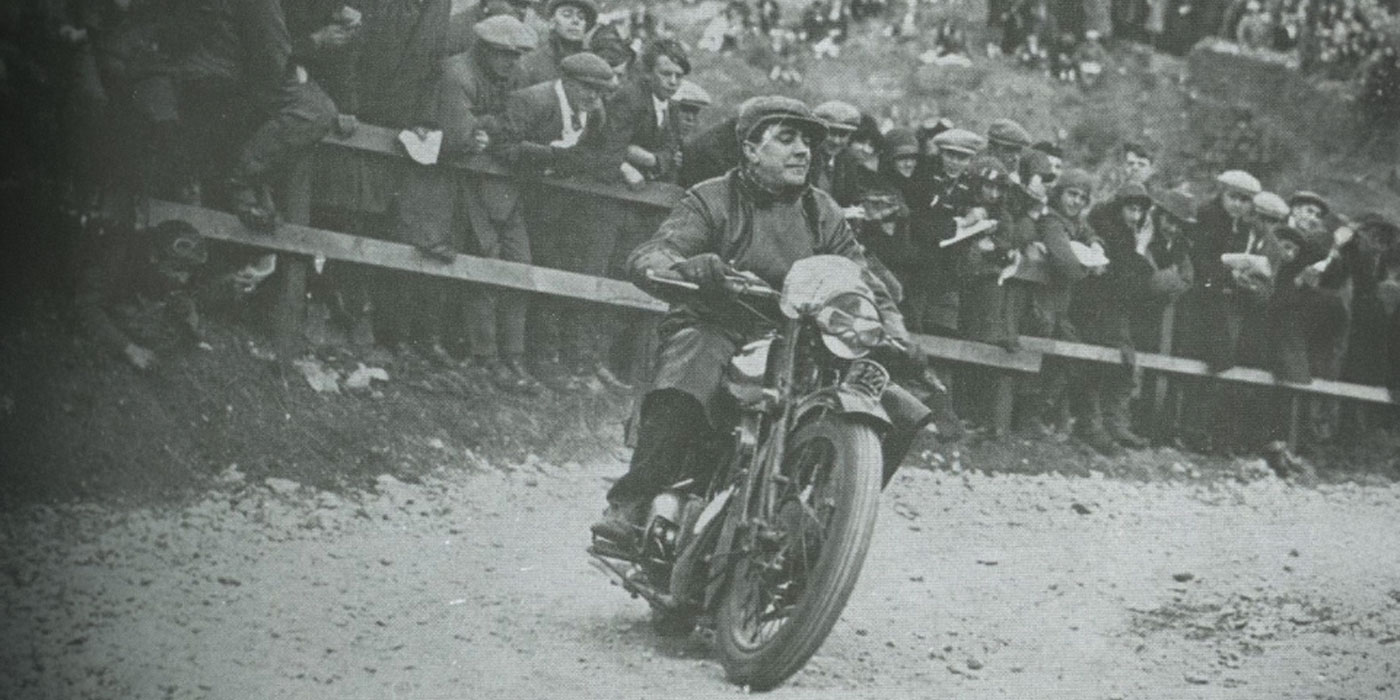
In 1906, at just 16 years old, he entered his first motorcycle competition. Racing served not only as a test ground but also as a place of discipline, where George steadily expanded his limits. From 1910 to 1912, he competed in the prestigious long-distance London–Edinburgh rally, achieving three consecutive victories. His riding — powerful yet precise — already marked him as one of the most exceptional talents of the era. In 1912, he also conquered the demanding Scottish Six Days Trial, earning a gold medal. Through these feats, young George firmly established his name within the British motorcycle world.
But in 1914, the outbreak of the First World War forced him to step away from competition. Even under wartime conditions, however, he continued to refine his engineering knowledge, always thinking ahead to the postwar era. By the war’s end in 1918, George had matured into far more than a skilled rider: he had become a man of deep mechanical insight, technical expertise, and design intuition. Within him was a clear vision — to create the ideal motorcycle with his own hands. That vision would soon take shape under a name that would become legendary: **Brough Superior**.
George Brough’s youth was shaped by hands-on training under his father, William E. Brough. At Brough Motors, George was not treated merely as the founder’s son — he was regarded as a future pillar of the company. Through daily exposure to engineering and manufacturing processes, he absorbed knowledge, refined his technical intuition, and even exchanged design philosophies with his father as a near-equal. Yet as the era shifted, and motorcycle engineering approached a decisive crossroads, the difference in their values slowly became impossible to ignore. William remained firmly committed to traditional British design principles — flat-twin engines, horizontal tank lines, and conservative engineering ideals.
George, meanwhile, was already captivated by the expressive potential of **V-twin engines**, inspired by overseas manufacturers and race-proven performance. His desire to create an entirely new vision of the motorcycle grew stronger by the day. The decisive break came when he proposed developing a new 500 cc engine. Father and son clashed sharply over cost-sharing and design direction, and in 1919, George resolved to part ways. Using the £1000 inherited from his share of the family business, he purchased land on Haydn Road in Nottingham and set out to build his own factory — and his own future.
When choosing a name for the new brand, George immediately embraced a friend’s suggestion: **“Brough Superior.”** But the choice left a sting. Upon hearing the name, William reportedly remarked wryly: “Then mine must be Brough Inferior.” Even so, their separation was not a hostile severing of ties. George always held deep respect for his father’s work, fully aware that his own technical foundation had been built upon those early years in his father’s workshop. The precision, aesthetic sensibility, and craftsmanship he inherited from William would later become the very spirit that defines every Brough Superior motorcycle.
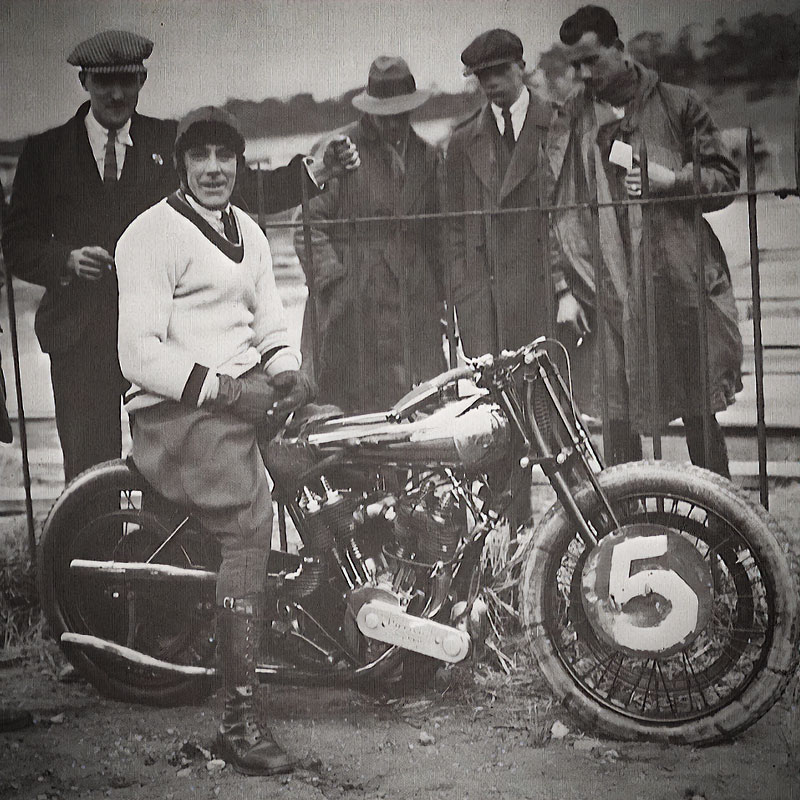
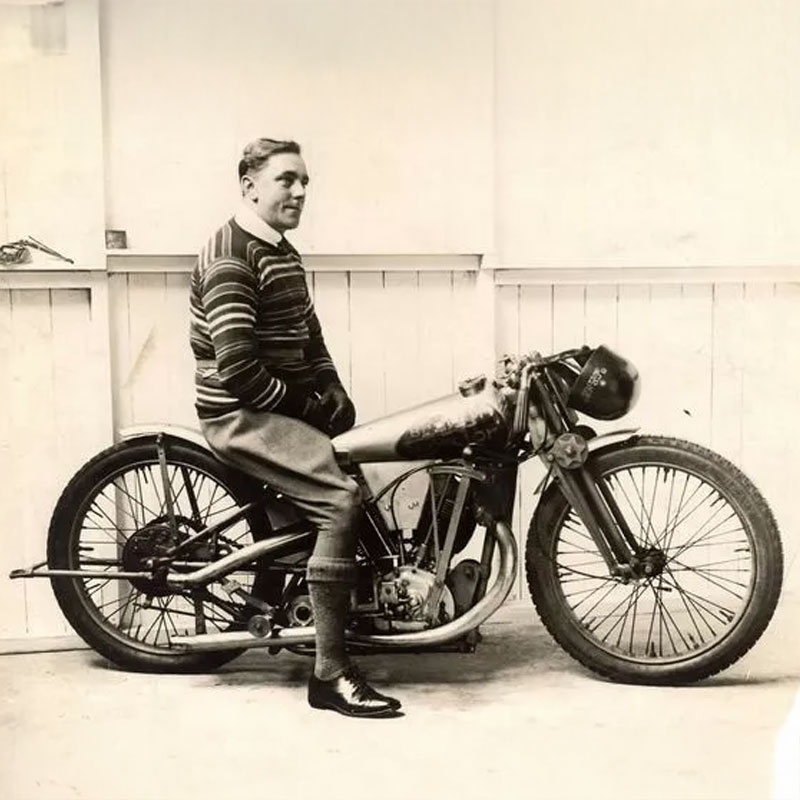
After parting ways with his father, George Brough founded his own marque — Brough Superior — guided by an unwavering conviction: to build a motorcycle that would surpass every other machine on earth. He was not a conventional designer, nor merely a manufacturer, nor simply a rider. He was all three at once — a rare figure in his era, capable of envisioning a machine, engineering it with his own hands, and then testing it himself at the limits of performance. Every Brough Superior was a bespoke creation. While major components such as engines and gearboxes were sourced externally, George exercised uncompromising control over chassis design, fit, finish, and final tuning.
Each motorcycle was first fully assembled, then completely dismantled, polished, and rebuilt before undergoing a final road test conducted by George himself. Only the machines that met his exacting standard were delivered to customers. This philosophy was famously expressed through his speed guarantee: the **S.S.80** would achieve a verified 80 mph average, and the **S.S.100** a verified 100 mph — not in theory, but in actual pre-delivery testing. Any machine that failed to meet the mark was returned to the factory without hesitation. Between 1920 and 1940, approximately 3000 Brough Superior motorcycles were produced. Though small in number, over a thousand remain in existence today — a testament to their extraordinary durability and structural excellence.
In 1928, George himself competed at a speed trial in Arpajon, France, achieving an astonishing 130.6 mph (approx. 210 km/h) — one of the fastest speeds in the world at the time. As both engineer and racer, he proved the worth of his machines not only on the road but also on the track. It was during these years that the name *Brough Superior* came to be known as **“The Rolls-Royce of Motorcycles.”** This was not a metaphor — legend holds that Rolls-Royce formally permitted the use of the title. Though expensive, these machines were seen by their owners not as costly indulgences, but as objects of pride, trust, and refined personal aesthetic. George’s legacy lies in elevating the motorcycle from a mere industrial product to a vessel through which individuality, artistry, and spirit could be expressed.
In 1919, as the First World War came to an end and Britain began to step into a new era, George Brough formally founded the motorcycle marque that would bear his own name — Brough Superior. His guiding philosophy was unambiguous, ambitious, and uncompromising: **“To create a motorcycle that surpasses all others.”** It was a declaration that sought not only mechanical supremacy — speed, strength, reliability — but also an elevated emotional value: artistry, dignity, and the joy of ownership. George did not begin with market research or cost calculations; he began with intuition, aesthetic judgment, and an unshakable personal ideal.
Drawing upon the experience earned in his father’s workshop, and the knowledge gained from racing, he envisioned a machine that fused the commanding presence of large American V-twins — the likes of Harley-Davidson and Indian — with the refined handling and craftsmanship that defined the best of British engineering. His manufacturing approach defied convention. George embraced the philosophy of **bespoke creation**, crafting each motorcycle as a unique, optimised piece for its future owner. While he sourced engines and gearboxes from the finest makers such as J.A.P. and Montgomery, he infused each machine with a design identity and finish that were unmistakably his own.
Every motorcycle underwent a ritual-like process. It was first assembled in its entirety, then completely dismantled. Frames, forks, and metal components were polished and finished to perfection before the machine was rebuilt. In the final stage, George himself conducted the road test — a personal examination of quality, precision, and performance. Only the motorcycles that passed his scrutiny received his approval. Thus, no two machines were ever entirely the same — each one carried its own character, its own precision, and its own presence as a singular creation.
The result was a motorcycle that combined structural integrity and absolute mechanical trustworthiness with the elegance and refinement usually reserved for high-end sports cars of the era. The name “Superior” was no boast — it was a statement of responsibility, dignity, and personal pride. Word of these extraordinary machines soon spread beyond Britain, drawing the attention of aristocrats, industrialists, explorers, military officers, and artists — individuals of distinction who sought not a mere vehicle, but a machine that resonated with their identity and personal philosophy. By the early 1920s, Brough Superior had already established itself as a premium marque without equal, and it was only natural that figures such as T.E. Lawrence and Noel Pope would later become devoted owners. For George, the brand was more than a business — it was the embodiment of a lifelong pursuit: the proof that craftsmanship and artistry could coexist within a machine, and that a motorcycle could become a living expression of philosophy itself.
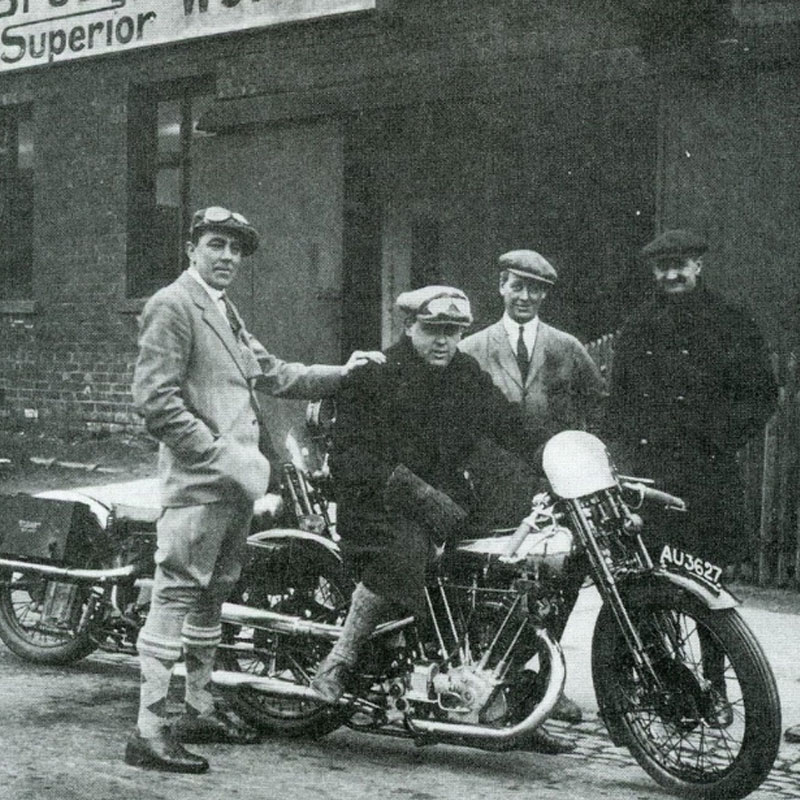
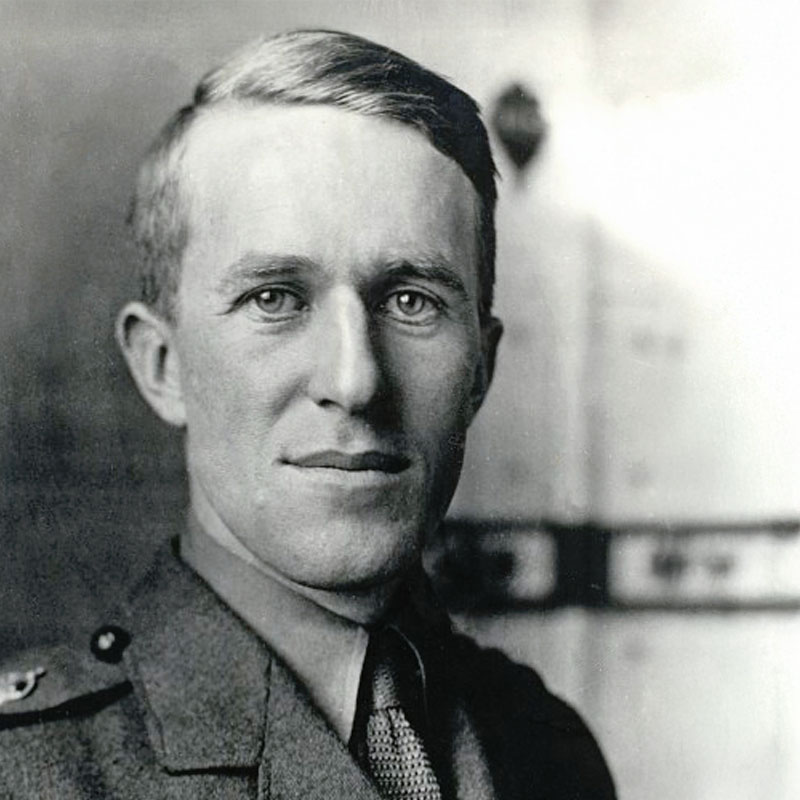
When one speaks of George Brough and the legacy of Brough Superior, there is a figure whose presence cannot be separated from the narrative: **T.E. Lawrence**, the legendary British officer known to the world as *Lawrence of Arabia*. Celebrated for his extraordinary achievements in the Middle Eastern theatre during the First World War, Lawrence withdrew from public life after the war, seeking solitude and distance from national scrutiny. Yet within him, an insatiable longing for speed continued to burn. To Lawrence, the motorcycle was more than a vehicle; it was a companion that offered freedom and solitude in equal measure. And among all machines, the one he cherished above all was the Brough Superior.
His first acquisition was a 1922 model. Over the course of his life, he owned a total of **seven** Brough Superiors, affectionately naming them *George I* through *George VII*. Each machine was treated as an individual being, meticulously ordered with personal specifications and deep affection. Between Lawrence and George Brough existed a dialogue that transcended the traditional relationship between rider and manufacturer — a shared sensibility, a mutual appreciation for precision, beauty, and intellectual craftsmanship. Lawrence frequently wrote letters to the factory, offering feedback and detailed requests, and Brough responded with bespoke adjustments crafted exclusively for him. Their correspondence reveals a relationship built on respect, refinement, and a common pursuit of excellence.
Then came the tragedy. On **13 May 1935**, while riding his beloved *George VII* (an S.S.100), Lawrence swerved to avoid an unexpected cyclist and suffered a fatal accident. His passing sent shockwaves throughout Britain, and the motorcycle he rode became forever intertwined with his legend. The circumstances of his death later influenced national safety policy — the study of his fatal head injury contributed significantly to the eventual establishment of mandatory helmet use. Such was the magnitude of his presence in the national memory.
What remains today is the enduring image of a man who, after the tumult of war and the burdens of fame, chose Brough Superior as the machine that carried him through his most private, contemplative hours. Records suggest that Lawrence once wrote words to the effect that *“Only when I ride this motorcycle do I feel truly myself.”* For him, the S.S.100 was not a mere tool of transport — it was a sanctuary of the spirit. That a figure such as T.E. Lawrence chose, loved, and remained with Brough Superior until his final moments stands as one of the most eloquent testaments to the ideals George Brough pursued: the creation of a motorcycle that embodies beauty, integrity, and soul.
When the name **Brough Superior** is spoken, there is one comparison that echoes repeatedly across history — a comparison not born of exaggeration, but of genuine recognition: the association with **Rolls-Royce**, the most illustrious symbol of British engineering excellence. In the 1920s, amid a thriving British motorcycle industry, Brough Superior stood alone, radiant in refinement. Its silhouette, its engineering precision, its immaculate finish — each element reflected a level of craftsmanship far beyond the expectations of its time.
It was during this era that a journalist famously described it as *“The Rolls-Royce of Motorcycles.”* What began as a single line in print swiftly spread, embraced by enthusiasts and later adopted in the company’s own advertising. Naturally, the Rolls-Royce name was — and still is — protected with the utmost strictness. Unauthorized usage could have posed a serious issue. Yet legend tells that when a Rolls-Royce representative visited the Brough Superior works, he observed the manufacturing process, the relentless quality control, and the overwhelming precision of every completed machine. Deeply impressed, he simply declared: *“With this level of quality, you may use the name.”* Thus, the comparison became more than a phrase — it became a formal acknowledgment of excellence.
George Brough’s belief in creating a motorcycle that was truly *superior* — in performance, aesthetics, and integrity — was recognized not only by riders and critics, but by one of Britain’s most revered manufacturers. During the Second World War, the connection between the two marques deepened in a far more practical sense. Brough Superior halted civilian motorcycle production and joined in the manufacturing effort for components of the **Rolls-Royce Merlin engine**, the powerplant of the legendary Spitfire fighter aircraft. Contributing to the creation of one of the finest engines in aviation history further demonstrated the precision and trustworthiness at the heart of the Brough Superior workshop.
Today, Rolls-Royce remains synonymous with supreme quality. Yet the legacy of Brough Superior endures alongside it — not merely as a brand once compared to a legend, but as a name that earned its place through unwavering craftsmanship, devotion to beauty, and a standard of excellence that time has only intensified. Quality is not a boast; it is a discipline forged through hours, hands, and conviction. And at times, it is a truth so evident that even giants like Rolls-Royce need speak only through their silence to acknowledge it.
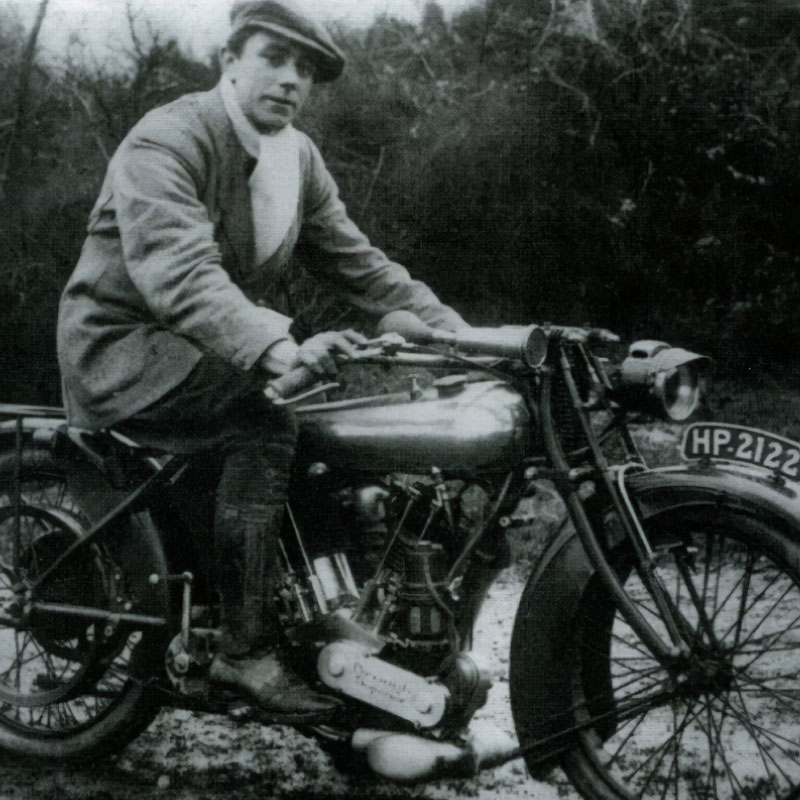
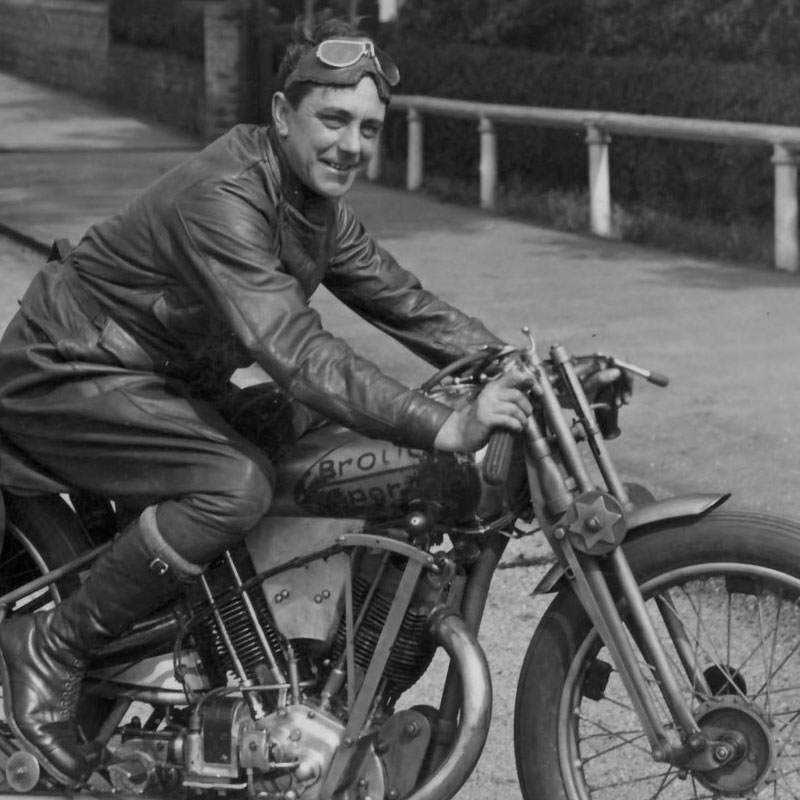
The name **George Brough** is far more than the designation of a man or a brand. In the world of motorcycling, it has come to represent a singular ideal — a philosophy given form. Builder, designer, and the very rider who proved the worth of his creations, George embodied a rare unity of vision and execution. The machines he brought into existence were not mere vehicles; they were expressions of speed, beauty, trust, and individuality. Under the name *Brough Superior*, literally “the superior Brough,” he sought perfection not through mass production but through touch, intuition, and an unwavering belief that a motorcycle could possess its own quiet nobility.
Metal polished to a mirror glow, frames reassembled with uncompromising precision, and machines that revealed their final truth only after the baptism of the open road — each carried the imprint of George’s eye and hand. And that perfection was never dictated by mere numbers or performance charts. It was a standard born from conviction. A Brough Superior bestowed pride upon its owner, liberation upon its rider, and reverence upon all who looked upon it. In this, George did more than build motorcycles — he elevated the machine into a cultural artifact.
In 1969, in Nottingham, George Brough quietly departed this world. Yet the motorcycles he crafted continue to run, cherished across continents, carrying with them the thrill and dignity once felt by their first custodians. His legacy remains alive not because nostalgia clings to the past, but because the standard he created has never ceased to be sought. His work answered enduring questions: *What is speed? What is beauty? What does it mean to own something with one’s heart?* Those questions transcend eras — and so does his name.
Today, the name **Brough Superior** is still spoken with admiration, longing, and respect. And at its center stands the figure of a man who refused to compromise his ideals, and in doing so, shaped a legacy that time itself has not diminished. As long as there are riders who feel the soul of a machine, the name **George Brough** will continue its journey — not as a memory, but as a presence that rides with the wind.
Retirement from Racing — and the Spirit That Never Left the Saddle
From his youth, George displayed a natural gift for riding, earning victories in long-distance rallies and trials throughout Britain. In the late 1920s, however, a severe high-speed accident left him gravely injured. At the request of his wife Constance, he stepped away from competitive racing — yet the fire within him never dimmed. Though no longer on the starting grid, he continued to ride privately, embodying a philosophy of “a lifetime rider,” a man who would never relinquish the road that shaped him.
The Renowned Flat Cap — A Gentleman at Speed
George was known for his refined, understated elegance. His most iconic hallmark was the flat cap specially crafted to withstand high-speed winds. Made by the prestigious London hatter **Lock & Co. Hatters**, the cap featured a low crown, deep fit, and firm hold — a piece engineered as much as tailored. The sight of George cutting through the air, cap fixed firmly in place, became a symbol of the “modern gentleman rider,” immortalized in magazines and admired by young enthusiasts. Even today, replicas of his bespoke cap are sought by collectors, a testament to a style — and a philosophy — that still resonates.
A Man of Integrity — His Gaze Toward Every Customer
Though charismatic in public, George was a man of deep humility and sincerity. His devotion to his wife Constance was unwavering, and in private life he carried himself with quiet dignity. This sincerity extended to his customers as well. George believed that a motorcycle was not merely sold but shared — and so he often welcomed visitors to the factory canteen, serving them tea himself and speaking not of prices or specifications, but of the stories that unfold between a rider and a machine. It was in these conversations that his philosophy lived most vividly.
Sir William Lyons — Founder of Jaguar, and an Unexpected Story
In 1929, William Lyons — later the founder of Jaguar — purchased a Brough Superior S.S.100 and was profoundly moved by its design and performance. Inspired, he named his new sports car **S.S.100**. At first, George was furious, believing his signature model name had been taken. But once Lyons’ genuine admiration and lack of ill intent became clear, the tension eased, and the two ultimately grew close. In time, they would stand as kindred spirits — creators of Britain’s most celebrated expressions of mechanical beauty.
The Four-Wheel Dream — Brilliant Yet Short-Lived
During the mid-1930s, George ventured into producing four-wheel sports cars under his own name. Several prototypes were built with the finest craftsmanship, yet commercial production never materialized. Even so, the surviving examples are treasured as rare works that reveal George’s uncompromising vision extended far beyond two wheels.
Final Years and Words of Farewell
In 1969, George passed away peacefully at his Nottingham home at the age of seventy-nine. He had long stepped back from manufacturing, yet never once surrendered his passion for motorcycles. In January 1970, *The Motor* published an obituary, describing him as “a showman who built world-record motorcycles” — a tribute not only to his technical genius but to the presence and charisma that defined him.
Legacy Preserved Through Time
More than half a century after his passing, George Brough’s name and his motorcycles remain revered across the world. Each Brough Superior — rare, iconic, and meticulously preserved — is a living fragment of history. His philosophy and craftsmanship endure not merely as anecdotes, but as a cultural legacy still very much alive in the present.